
Learn / Short-term vs long-term gains
In the United States a gain on an investment held more than one year is a long-term capital gain. Held one year or less, it is short-term and taxed like ordinary income. For most people the long-term rate is lower, so the sale date is worth checking.
How the year is counted
The holding period starts the day after the trade date you bought and includes the trade date you sold. Settlement dates do not count. To be long-term you have to sell after the one-year anniversary, not on it.
Shares bought on March 10, 2025 (an example)
| Sold on | Held | Kind |
|---|---|---|
| March 10, 2026 | exactly one year | short-term |
| March 11, 2026 | more than one year | long-term |
Count calendar years, not days. A year that includes February 29 has 366 days, so "more than 365 days" is not always "more than one year". Shares bought on February 1, 2024 and sold on February 1, 2025 have been held 366 days, and the sale is still short-term.
Each lot is counted on its own
If you bought a position in several purchases, each lot has its own date, and one sale can be part long-term and part short-term. Which lots count as sold, oldest first or ones you name, decides the split. The cost basis article works through an example.
Where it shows in FolioBright
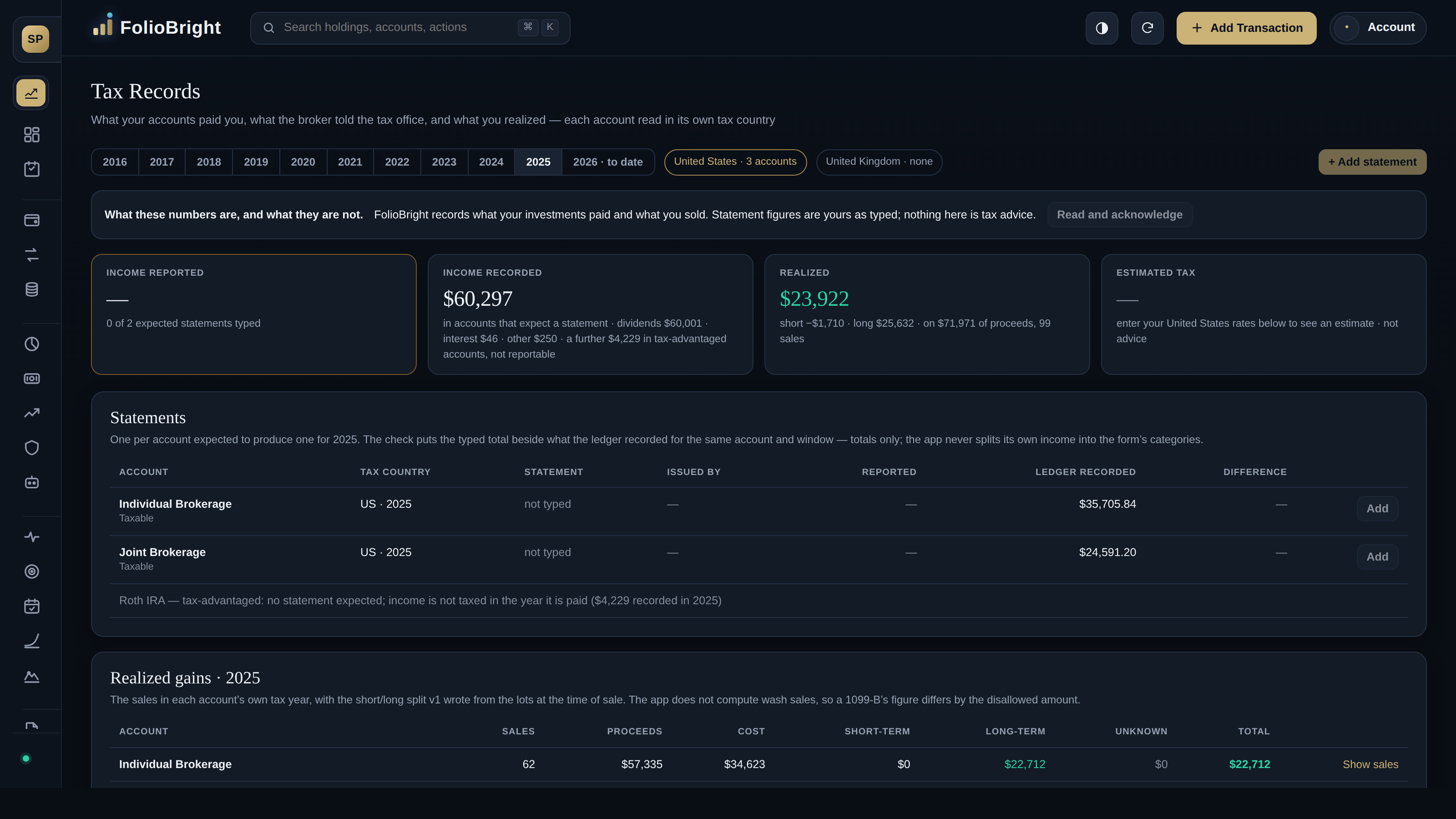
Each lot keeps its purchase date, and each is marked long-term or short-term. The Tax Records page splits every year's realized gains into short-term, long-term and unknown. Unknown is for shares recorded without a purchase date, so a gap in the records shows instead of being guessed. Accounts that are not taxable, like a Roth IRA or a 401(k), are listed apart: a sale inside them is not a capital gains event.
Questions
How long do I have to hold a stock for a long-term capital gain?
More than one year. The holding period starts the day after the trade date you bought, so you have to sell after the one-year anniversary, not on it.
Is selling on the one-year anniversary long-term?
No. Shares bought on March 10, 2025 and sold on March 10, 2026 were held exactly one year, which is short-term. Selling on March 11, 2026 makes it long-term.
Can one sale be both short-term and long-term?
Yes. If the shares sold came from lots bought at different times, each lot is judged by its own purchase date.
Do capital gains apply inside a Roth IRA or a 401(k)?
No. Sales inside those accounts are not taxed when they happen, so FolioBright lists them apart from the taxable accounts' gains.