
Learn / Cost basis and lots
Your cost basis is what you paid for shares, fees included. When you sell, your gain is what you received, after selling costs, minus that basis. That is simple for a position bought all at once. When you bought at different times and prices, each purchase is a separate lot, and the answer depends on which lot you sold.
One position, two lots, two answers
Say you bought 100 shares at $50 in March 2023 and another 100 at $80 in January 2026. In November 2026 you sell 100 shares at $90, for $9,000.
The same sale, two ways (an example)
| Method | Shares that count as sold | Basis | Gain | Kind |
|---|---|---|---|---|
| FIFO (first in, first out) | the March 2023 lot | $5,000 | $4,000 | long-term |
| Specific lot | the January 2026 lot | $8,000 | $1,000 | short-term |
FIFO reports a larger gain at the lower long-term rate. The specific lot reports a smaller gain, taxed at short-term rates because those shares were held less than a year. Which costs less depends on your tax bracket and on what else you sold that year. Ask a tax professional which suits you.
The broker's method is the one that counts
If you do not name the lots by the time the trade settles, the law treats the oldest shares as sold first, and most brokers follow that default. Some use average cost for mutual funds. Whatever your broker applied is what goes on its 1099-B, so the method you record should match it. Choosing a lot after the fact, in a tracker, does not change what was reported.
How FolioBright records it
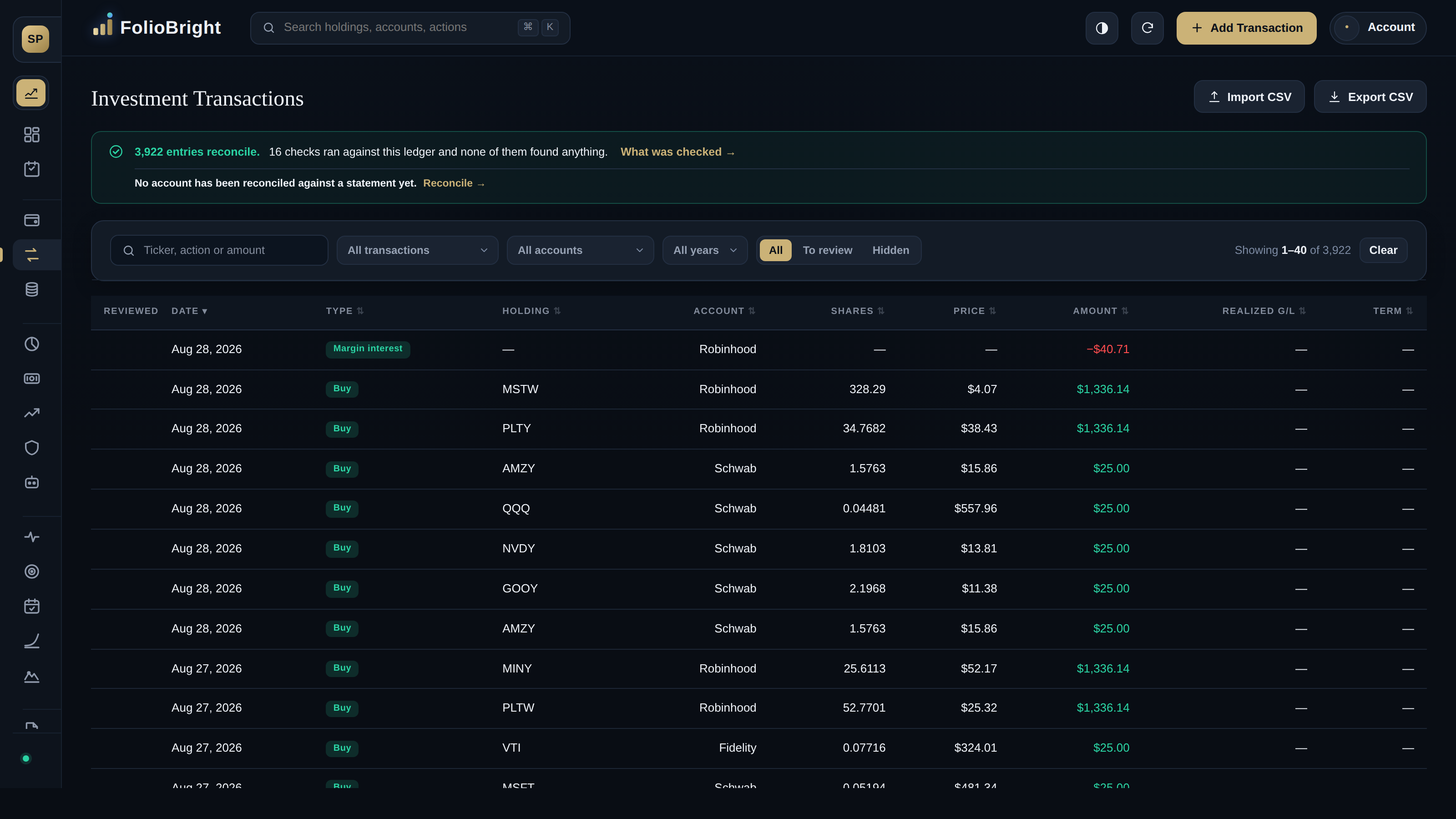
When you record a sale you choose FIFO or Specific lots, and with specific lots you pick the lots yourself. Every lot keeps its date and cost, and each is marked long-term or short-term, so the split on the Tax Records page comes from the lots that were actually sold. When you move shares from one account to another, you choose which lots go: oldest, newest, lowest cost or highest cost first.
Questions
What is cost basis?
Cost basis is what you paid for an investment, including fees. Your gain or loss when you sell is what you received, after selling costs, minus the basis of the shares sold.
What is the difference between FIFO and specific lot identification?
FIFO treats the oldest shares as sold first. Specific lot identification lets you name which shares you sold, for example the ones bought at the highest price. The two can give very different gains on the same sale.
Can I change the lot method after the sale?
Not for tax purposes. Lots have to be named by the time the trade settles, and what your broker applied is what it reports. Record the sale in FolioBright the way your broker did, so the two agree.
Does FolioBright handle wash sales?
No. It records each sale with the lots you chose and does not adjust for wash sales, and the Tax Records page says so.